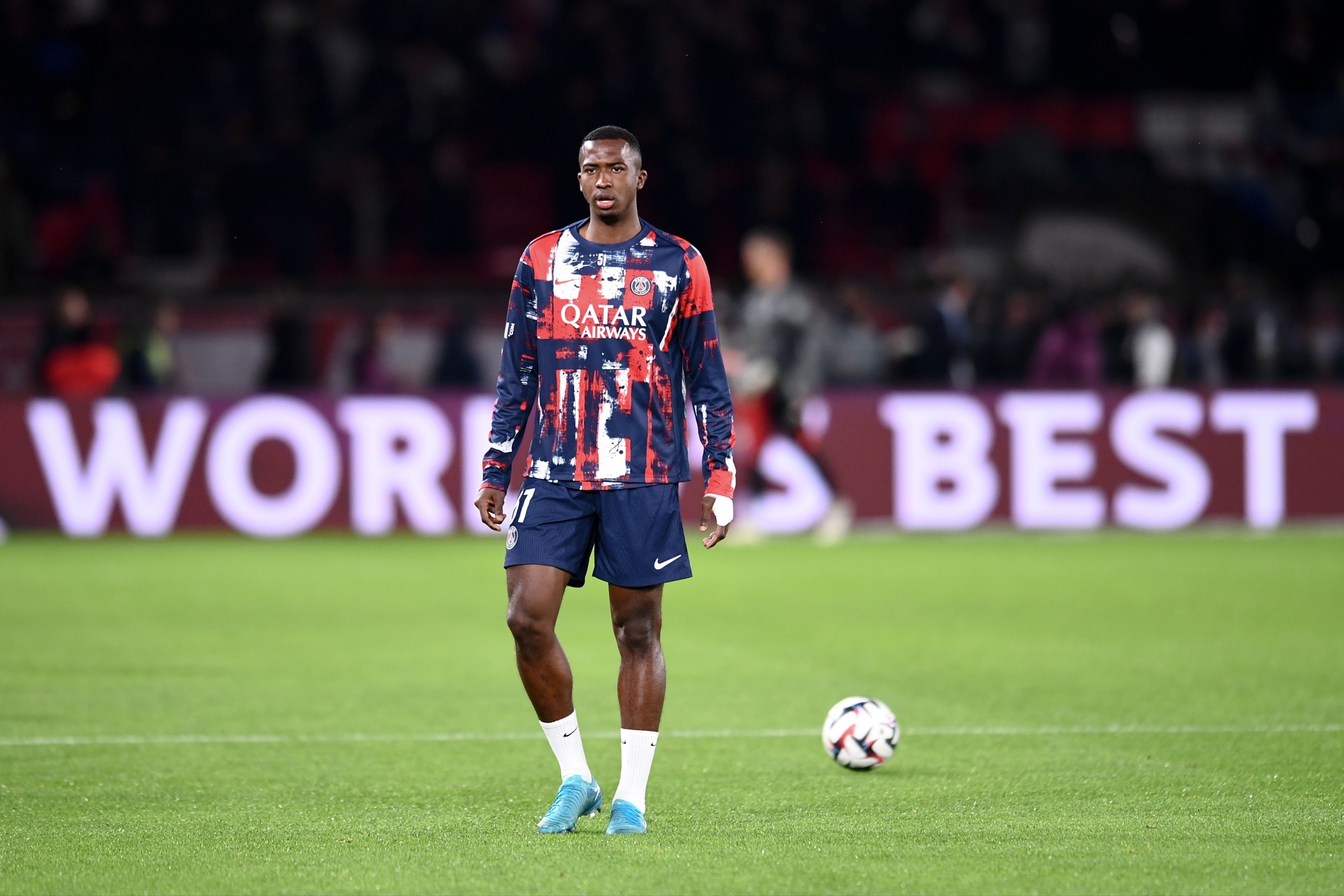
Willian Pacho is almost unrecognizable from the child he was back in Ecuador. Pacho is now a starting defender for one of Europe’s biggest clubs and one of the first Ecuadorians to play for PSG, a super-team in France. His greatest challenge, however, was not dealing with the problems he faced when he made it big. Rather, it was losing his mother, the person who inspired him to dream big, provided him with the opportunities he wanted, and was his number one fan.
Pacho was born on October 16, 2001, in Ecuador, in the country’s northwestern Esmeraldas province. His father left when he was born, leaving his mother to take care of him being the central figure in his childhood.
His mother loved dancing the bachata and listened to Aventura. Pacho tried to learn from his mother, staring at her feet and trying to copy the rhythm until he eventually got it right. This passion for dance would transform into wanting to become a naval officer when he saw his godmother’s husband’s outfit. The naval officer wore pristine white, and he became fascinated with this image.
Later on, this ever-evolving dream would finally turn into what would change his life in the future: football. Although his mother didn’t know exactly how football could provide for the family, she nevertheless supported his dreams.
His mother ran a food stall near his sister’s school during the day and would also earn additional money washing people's clothes by hand with a bucket. Pacho would support his mother by collecting leftover food from neighbors to feed the pigs that the family raised. People mocked and smirked at him. Yet, when December came and the family slaughtered the pigs, his mother shared the pork with all the neighbors, including those who didn’t help and made fun of Pacho. His mother believed there was no need to resent them, and that everyone deserved a feast.
“Give us scraps, and we turn it into a feast.”
Pacho would leave his home around the age of 15 for the Independiente del Valle academy. The concept of academy football confused his mother, who questioned why someone would provide her teenage son housing and food to play football. At first, he was extremely lonely; however, he would meet an Ecuadorian teenager at the academy, Moisés Caicedo, and the two would become roommates, then best friends.
The two would split the house chores, alternating between cooking the food and washing the dishes. Caicedo would be the first to reach the senior team, and this helped motivate Pacho that he could do the same too.
As Pacho approached the academy’s first team, Pacho’s family told him that a lump under his mother’s arm was cancer. His mother repeatedly explained that her condition wasn’t serious and didn’t want him to abandon his footballing dream when he was so close. Pacho would eventually return home in 2019, when he realized that his mother was, in fact, not fine.
His mother, who he remembered as physically and emotionally commanding, had become dramatically thinner. Among other things, she continually said that she was fine. Pacho was asleep next to her, crying silently because he didn’t want her worrying about him.
As Pacho returned to the academy, he decided not to take a photograph with his mother because he believed that would mean believing that this was a final goodbye. He didn’t want that, and thought there would be many more opportunities in the future to take pictures. On the bus ride to the academy, he cried, thinking about everything he still wanted to do for his mother, like buying her a house.
Months later, Pacho’s coach told him that he would make his first-team debut. Naturally, he called his mother; however, she didn’t answer. He texted her, telling her to go to bed early so she could watch his debut.
The next morning, he woke up to an overwhelming number of messages offering him condolences and talking about his mother. This caused Pacho to panic. He called his sister; however, she told him it was only a rumor. His family knew his mother had passed away, but deliberately kept it to themselves so he could play in his debut, believing that was what his mother would have wanted.
Pacho went onto the field believing his mom was watching, and afterwards, he couldn’t wait to speak with her.
Then, his coach pulled him into a room where his father and brother-in-law were waiting. His mother had died that morning.
He immediately wanted to go home. They drove through the Ecuadorian mountain roads during that night, making repeated stops to go to the bathroom. During the stops, Pacho stood near the edge of the mountain road, beginning to think about stepping off multiple times. He wondered whether or not this would allow him to see his mother again.
When they reached his hometown, people came from throughout the community to console him. Pacho walked toward his house still wearing the kit from his professional debut. The closer he got to his home, the more difficult it became because reaching the house meant accepting that his mother’s death was real.
Once inside, he went into his mother’s room, staying there for a week.
Pacho tried talking with a psychologist about his feelings, but he couldn’t explain to a stranger what he was feeling. For him, healing came from football.
Grief changed the way he played, transforming him from a gentle player into one carrying enormous rage, helplessness, and pain. His first game back demonstrated the problem, receiving a yellow card immediately.
Just minutes later, he would get a red. Through a lot of obstacles, his grief transformed from recklessness to better channeling his emotions, and now, he felt like worrying about a football match was absurd. This is where Pacho’s fear disappeared, and he began playing with hunger rather than anxiety.
Over the following years, Pacho would develop rapidly, and he would move to Europe. Before making the move and receiving the money, he wanted to buy a car like his friend Caicedo did. However, at the dealership, he encountered someone selling real estate, which reminded Pacho of the house he would never be able to buy for his mother. However, he realized that even if his mother couldn’t live in it anymore, his siblings could.
He chose to buy the house rather than the car.
Then, the transfer that built this whole decision collapsed. The club pulled back because of financial issues on their side after Pacho had already publicly said goodbye and his old club had already acquired another center back. He still owed half the money for his family’s house as well. Pacho described the experience as humiliating, yet the manager allowed him to stay, reassuring Pacho that his place remained.
During his second match back from the transfer collapse, however, Pacho would dislocate both shoulders. He decided to have the doctors operate on both shoulders to fix them, leading to his complete loss of independence, needing to rely on his sister for virtually everything.
While injured, Royal Antwerp decided to take a chance on him, agreeing to sign him despite his recovery. Pacho described them as taking a chance on a broken man.
Pacho arrived in Belgium dealing with injuries and not being able to speak English or French.
He trained alone and remembered messaging Caicedo that he was experiencing severe loneliness and reminding himself that depression could not defeat him.
His resilience would lead to him developing into one of the best defenders in the club, leading Frankfurt then PSG to ask him to transfer.
He would become the first Ecuadorian player in PSG’s history.
Despite all the challenges that he faced, which began with the loss of his mother on his professional footballing debut, Pacho continued to move forward. He turned the scraps that life tossed him and transformed them into a feast, connecting his success to his mother’s lesson to him when he was a child,
“Give us scraps, and we turn it into a feast.”
Share
Share this story
References
Sources
- The Players’ Tribune — Willian Pacho, “Mamá, This Is for You” (external link)
- Paris Saint-Germain — Willian Pacho signs for Paris Saint-Germain until 2029 (external link)
- Paris Saint-Germain — Willian Pacho: Solid Youth (external link)
- Paris Saint-Germain — Willian Pacho player profile (external link)