Unlike many elite footballers who adopted their drive from growing up in poverty, while others overcame injury and family tragedy, world champion Rodri’s challenge came from being told that he wasn’t fit to play professional soccer. Rodri spent years being told that his qualities were not the talents that made a professional athlete. He wasn’t explosive, flashy, physically dominant, or scoring spectacular goals. However, he was analytical, quiet, and obsessed with understanding football down to the bare bones, unpacking his opponents and analyzing their patterns and behaviors. Rodri’s story highlights what happens when the world tells you your greatest strengths aren’t valuable, and you prove them wrong.
Rodrigo Hernández Cascante was born on June 22, 1996, in Madrid, Spain. He grew up in a household that emphasized education and provided a very supportive environment. His father worked as an engineer and his mother worked in business, neither believing football was the only way out. While other environments taught footballers that their talent in the sport was the only way out, Rodri’s family insisted that football was important but so was education.
This focus on education would grow into how he would approach football as a sport. Rodri didn’t constantly try showing off tricks, but watched positioning, dribbles, and passing lanes. Rodri began his football journey at CF Rayo Majahonda. The club emphasized technical football rather than physically dominant children, and by the age of eleven, Atlético Madrid noticed Rodri’s talent and invited him to their academy. It was a dream for Rodri, and he believed he would spend the rest of his career with them.
For six years, Rodri progressed with the academy, yet as he progressed through the age ranks, he noticed that he wasn’t physically developing like his peers. Many coaches saw his intelligence; however, they doubted whether or not his body would catch up.
In 2013, Atlético Madrid would decide to release him. He was 17 years old, and the club he believed he would spend the rest of his career with told him that he was not athletic enough. Rodri later admitted feeling devastated during that moment and cried a lot. He questioned whether or not football had been worth sacrificing a large portion of his childhood on.
Needing someone to lean on, Rodri would call his father. He expected a sympathetic response but was instead met with perspective. Rodri’s father told him that he had invested so much time in this sport that he loved that this was not the time to give up, but to go for broke. Instead of seeing rejection as proof he wasn’t good enough, he began seeing it as something to respond to.
Shortly afterwards, Villarreal would offer a chance to play with them. This meant that he would have to cross hundreds of kilometers, leaving his friends, family, and childhood to pursue this dream that he desperately wanted to catch.
While pursuing his dream of becoming a professional footballer, Rodri would also enroll at Jaume I University to study Business Administration and Management. Rodri chose to live in student housing and live a normal life, a life that he had previously missed out on because of his soccer commitments. His classmates remember him engaging with them like a regular student, then disappearing on weekends because he had La Liga matches.
Then, in 2018, Atlético Madrid wanted him back. Many wondered why Rodri wanted to return to a club that had released him all those years ago; however, he believed that the club had transformed into an amazing learning experience with Diego Simeone, the head manager of the club.
In 2019, he would sign with Manchester City and immediately faced enormous pressure, being expected to be Fernandinho’s replacement. Many City fans criticized him for being too slow, safe, and not dominating games. Rodri ignored this outside noise that mimicked the criticism that had previously bothered him during his youth career and trusted in his development. He would prove all the City supporters wrong when he scored in the 68th minute of the Champions League Final, becoming one of the most important goals in the club’s history.
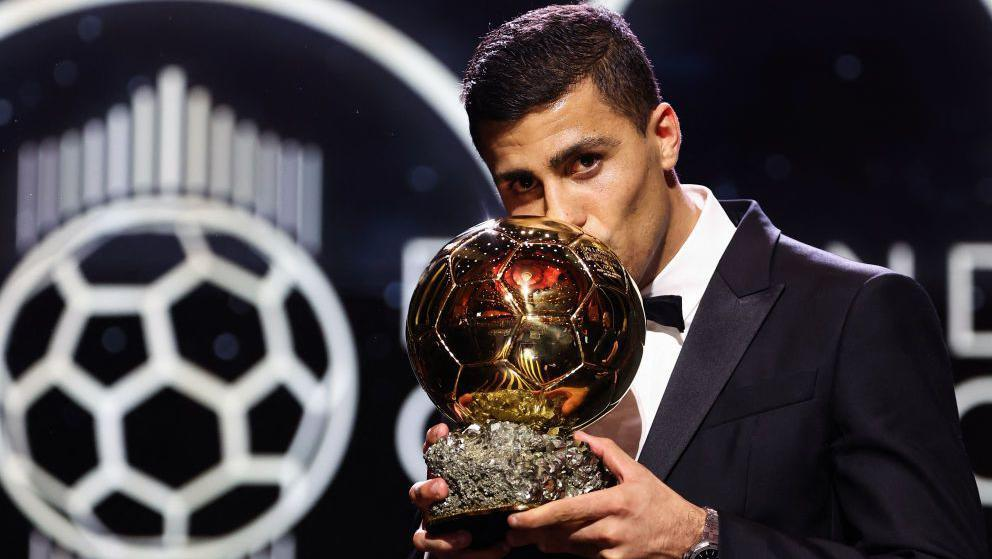
He would win the Ballon d’Or and prove to the world that football intelligence could achieve the game’s highest honor without needing to be flashy or creative. A month before winning, he would suffer a major ACL injury, which halted the momentum he had finally gotten from being at the top of the world. Rather than rushing back, he approached it methodically and emphasized his long-term health rather than short-term appearance.
“Sometimes, the traits people overlook are the core foundation of greatness.”
Rodri’s legacy would embody the philosophy of sticking to your lane and that the qualities that make you extraordinary are not always what make you immediately recognized. Sometimes, the traits people overlook are the core foundation of greatness.
Share
Share this story
References Sources
- Manchester City — “Rodrigo: University was the best time of my life” (external link)
- Manchester City — Official Rodri player profile (external link)
- UEFA — “Rodri named EURO 2024 Player of the Tournament” (external link)
- UEFA — “Rodri wins 2024 Men’s Ballon d’Or” (external link)
- UEFA — “Spain 2–1 England: UEFA EURO 2024 final analysis” (external link)
- The Guardian — “Rodri: ‘Klopp’s teams go at you like animals. They’re like a knife’” (October 18, 2019) (external link)
- The Guardian — “Spain’s Rodri: ‘I try to learn from Busquets but I have always been myself’” (June 13, 2021) (external link)
- Manchester City — “Rodri: Coping with injury has been difficult” (external link)