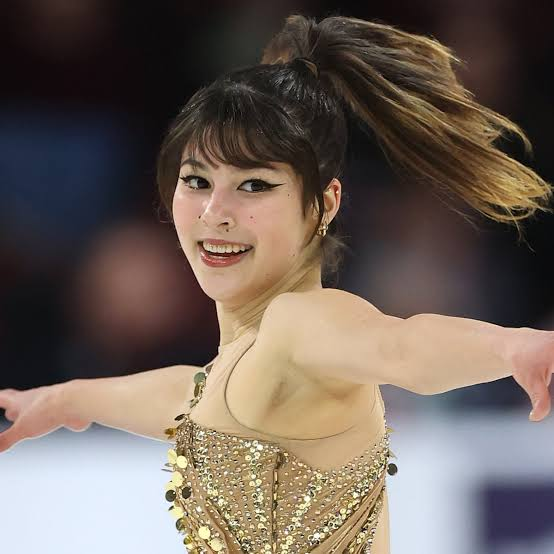
Alysa Liu is one of the best-documented examples in modern sports of an athlete walking away when she had just begun her career due to overwhelming stress and burnout, then rediscovering her love for the sport on her own terms.
A Champion Before She Was a Teenager
Alysa Liu was born on August 8, 2005, in Clovis, California, and then moved to Richmond in the San Francisco Bay Area, where she trained in Oakland. She was introduced to skating when she was only five years old after her father began enrolling her in lessons. Even at a very young age, coaches recognized that Alysa had talent that made her exceed the skills of her own age group and that she possessed extraordinary athleticism, awareness, and fearlessness. Liu would explode onto the national stage almost immediately and would be seen landing jumps that girls who were several years older than her could not. At 13 years old, she became the youngest U.S. national champion in history, breaking a record that had stood since 1937. In the following year, she defended the title and became the youngest woman to consistently pull off triple Axels. She also became the first American woman to land a quadruple Lutz in competition.
It seemed like almost overnight, Alysa became an international sensation and was portrayed as the future of American women’s figure skating; however, in the background, something more complicated was going on.
When Skating Stopped Being Fun
Figure skating has always been a sport where athletes mature very early on and must begin at a young age. Elite skaters will need to sacrifice their school and social life as children to spend nearly every day at a rink. Alysa was no exception, and for years, every aspect of her life revolved around skating. It felt like skating was the only thing she ever did, and outside of it, she had nothing; it had become her entire identity.
As her skills grew and she was seen more and more in the media, expectations grew, and her training intensified. Every competition became another opportunity for her to prove to others that she deserved her title, and this pressure would remain with her constantly.
Years later, when COVID-19 hit and she got to take a break from skating, she realized after time away that she no longer enjoyed the sport. This shocked many people in the sport. Alysa later explained that, after years of nonstop training, the goals she had used skating as a medium to reach had disappeared. She wasn’t skating because she wanted to skate; she felt like she had to because there was nothing else for her.
Walking Away at Sixteen
At the 2022 Beijing Winter Olympics, Liu finished sixth in the women’s event. Only days after earning a bronze medal at the 2022 World Championships, she would announce to the whole world that she was retiring at 16 years old. Liu later said she had secretly reached the decision months before, rather than making it in reaction to one competition. She had accomplished titles and dreams that many elite figure skaters strove for years to accomplish, and now she felt like there was nothing left for her in the sport. She would walk away for the time being and later explained that it was about reclaiming a life that had been taken away by skating.
Learning Who Alysa Was Without Skating
For the first time in her life, she didn’t have to think about skating. She could have ordinary experiences with friends and go to school without any worries except for homework and college. Alysa would enroll at UCLA and travel, exploring other sports and hobbies that she had been unable to before because of the risk of injury.
She was finally able to experience what it was like to be a normal teenager. Growing up in an Asian American household, Alysa has spoken about how conversations surrounding mental health were uncommon in her family. Through this break from skating, Alysa was able to rediscover herself and who she was and become a better person outside of just skating.
Missing the Ice, Not the Pressure
Ironically, what brought Alysa back to figure skating was not another competition, but a skiing trip where she felt the cold air and rush that skating had once brought to her years before. Being curious, she would go back to the ice rink recreationally, this time with no elite coaches critiquing her every movement and cameras everywhere she walked. Just her, the ice, and skating.
“I don’t fit my life into skating — I fit skating into my life.”
Returning on Her Own Terms
Alysa would return to training in 2024; however, every aspect of her relationship with skating had changed. She was in charge of the music she skated to, the costumes and choreography, the training schedule she had, and the team that surrounded her. Now, she said, winning and losing didn’t affect her, and it was just her enjoyment of the sport.
She entered competitive skating again with little expectation; however, just like years before, she performed magic on ice, this time even freer than before. She smiled and was natural. Only months after returning to competition, she would prove that she had the same talent and skill as before, but this time, she had control over it. She finished second at the 2025 U.S. Figure Skating Championships and then won the 2025 World Figure Skating Championships, becoming the first American woman to claim the World title since Kimmie Meissner in 2006.
A Different Definition of Success
In February 2026, Liu also won the women’s individual Olympic gold medal at the Milano Cortina Winter Games, ending a 24-year wait for an American women’s Olympic champion. Yet the medals were not the only proof that her return was worthwhile. Alysa is often described not simply as one of the world’s best figure skaters, but as an athlete who redefined her relationship with the sport and one who built autonomy and joy over extrinsic values. Walking away was not a failure. It gave her the independence and emotional distance she needed to rediscover the sport she had loved since childhood, and that transformation mattered regardless of whether she ever won another medal.
Share
Share this story
References Sources
- Team USA — “The 2025 World Champion Alysa Liu Is Finally Skating on Her Own Terms” (external link)
- The Guardian — “‘If There Was No One on Earth, I Would Still Skate’: Alysa Liu on Her Remarkable Figure Skating Comeback” (external link)
- Sports Illustrated — “Alysa Liu Fell in Love With Skating All Over Again—And Is Now a World Champion” (external link)
- The Guardian — “Alysa Liu Left Figure Skating Behind. She Came Back Better Than Ever” (external link)
- International Skating Union — Alysa Liu athlete profile and official competition record (external link)
- International Skating Union — “Incredible Alysa Liu Strikes Gold in Spectacular Finale” (external link)
- The Guardian — “Alysa Liu Wins Winter Olympics Gold to End US Women’s 24-Year Figure Skating Drought” (external link)