I work as a student intern at the Scripps Research Institute, a prestigious research institute, studying neuroscience. A few months after I began the internship, my professor sat me down and told me something I would never forget. Research, just like any other hobby or skill you might have, begins with learning mundane and often very robotic and simplified tasks. You repeat these tasks, such as cryosectioning, imaging, and staining, every single day, for weeks on end. You continue this process until you can see the cryostat or the DAPI fluorescence media when you close your eyes. This process might seem grueling, but this rinse-and-repeat cycle is what allows you to finally be able to enjoy research, or as he says, "enjoy the music."
Musicians spent hours on end practicing the most preliminary and rudimentary skills: chords, scales, and techniques. These are things even an amateur musician, having only played the piano, the violin, the viola, or any other instrument, could achieve with near perfection. Even after decades of music experience, the professionals still resort to practicing with the simplest chords and scales. Only when you are able to master the basics are you able to truly appreciate the music. Only when you pour your blood, sweat, and tears, perfectly articulating each note, having the chords engraved into your hands and fingers, are you able to truly let them free, allow them to scatter and dance around the keyboard, and appreciate the hard work you have endured.
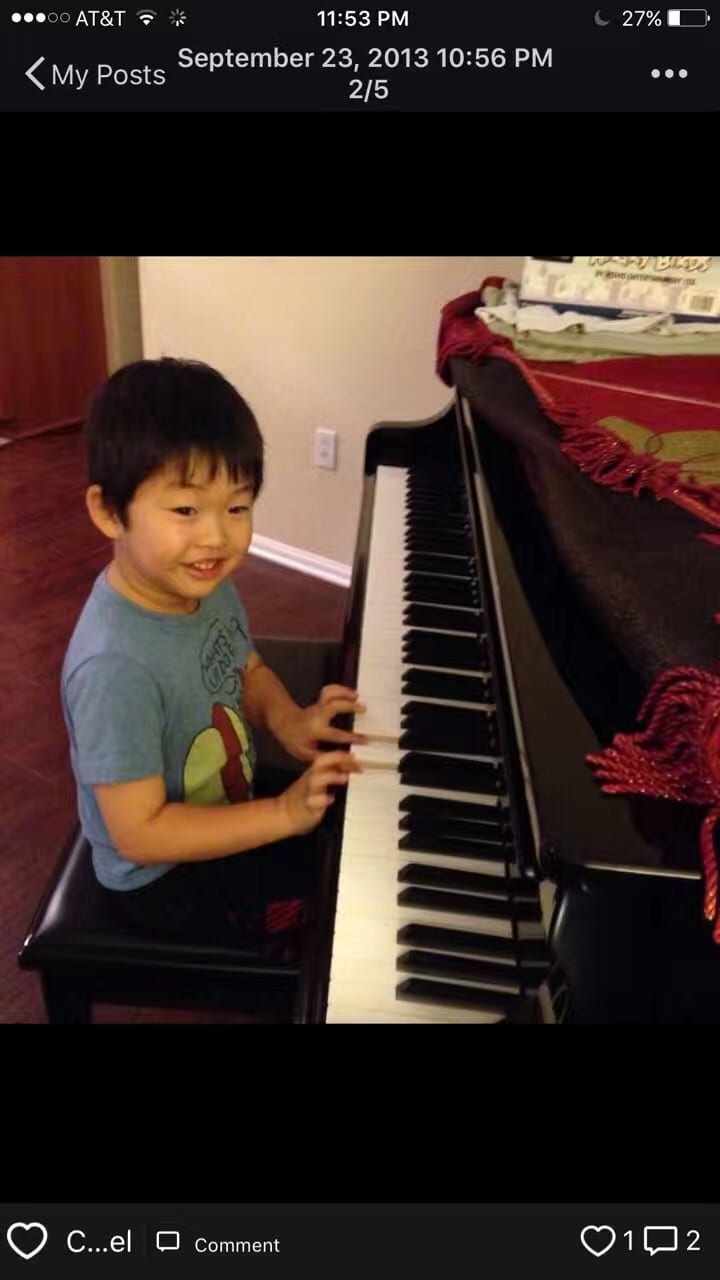
I was introduced very early to piano, around the time I was only three or four years old. I have been enrolled in piano lessons every week since my third birthday, all the way until now. In the beginning, my father and I had many arguments, during which I would throw a tantrum, and I would swear to him that I didn't want to touch a piano in my life again. I would throw a fit after a fit. Even with these conflicts, I continued to play. I continued to practice these chords, and I continued to play music that I believed was not worth the effort I put in. For a decade, I survived each piano lesson with half the passion I should have. Walking a plank with the energy of a zombie.
Everything changed when I was introduced to the piece "Fantasie Impromptu." Fantasie Impromptu was a piano solo composed by Chopin and published by his friend, despite Chopin's wishes to burn the unpublished manuscript alongside his other unpublished works before his death. I thank Chopin's friend, Julian Fontana, for not listening to his friend's dying wishes, because, for whatever reason, Chopin believed it should not have been published; it completely changed my outlook and perspective on piano. The chaotic and sudden beginning transitions into a melodic and harmonious middle before concluding with a serene finish. This piece opened my eyes to the world of piano and allowed me to truly "enjoy the music." It was a piece that required immense technical skill, requiring extreme precision and dexterity in both hands, utilizing the simple chords and scales that you would only be able to accomplish at the astonishingly quick tempo if you spent hours practicing them every day.
The scales that I once passed up as being a waste of time, being way too simple, being way below my skill level, came back to bite me, running back at me with its hand held high, getting the last laugh. I surrendered to them, and I poured myself into the music. I practiced the simple scales day in, day out, until I had them in the back of my mind, playing imaginary keys with my hand on the desk at school. That continuity, that endless cycle, finally paid off. I was able to play a piece that Chopin wouldn't have expected anyone but him to hear. As I played the piece, watching my fingers glide along the keyboard, I stopped thinking of pressing each and every individual key. I was able to close my eyes, feel the heartbeat in the score, and truly enjoy the music.
I am sure many believe that growth comes from lightbulb ideas, a sudden a-ha moment, and breakthroughs that nobody would expect. I want to challenge that notion. I want to highlight that growth comes from the quiet. Growth comes from the constant repetition, practice, and willingness to repeat the same tasks even when others put you down and tell you it's a waste of time. The scales that I once dismissed, tossed, and labeled as too simplistic are the things that carried me through my journey, building a solid foundation for me to stand on, allowing me to finally enjoy the music I played. Even if you don't play an instrument, life in itself operates the same way. The routines, hardships, and repetition that we often hate to face, seeing them as mere annoyances, are exactly the things that prepare us every day to one day enjoy the music.
Support
Resources & Support
If this story resonated with you, the following organizations and resources offer guidance on perseverance, music education, student wellbeing, growth mindset, and personal development.
Broad Shoulders Initiative is not a crisis service, medical provider, or therapy provider. If support feels urgent, please contact emergency services, a trusted adult, a school counselor, or a licensed professional.