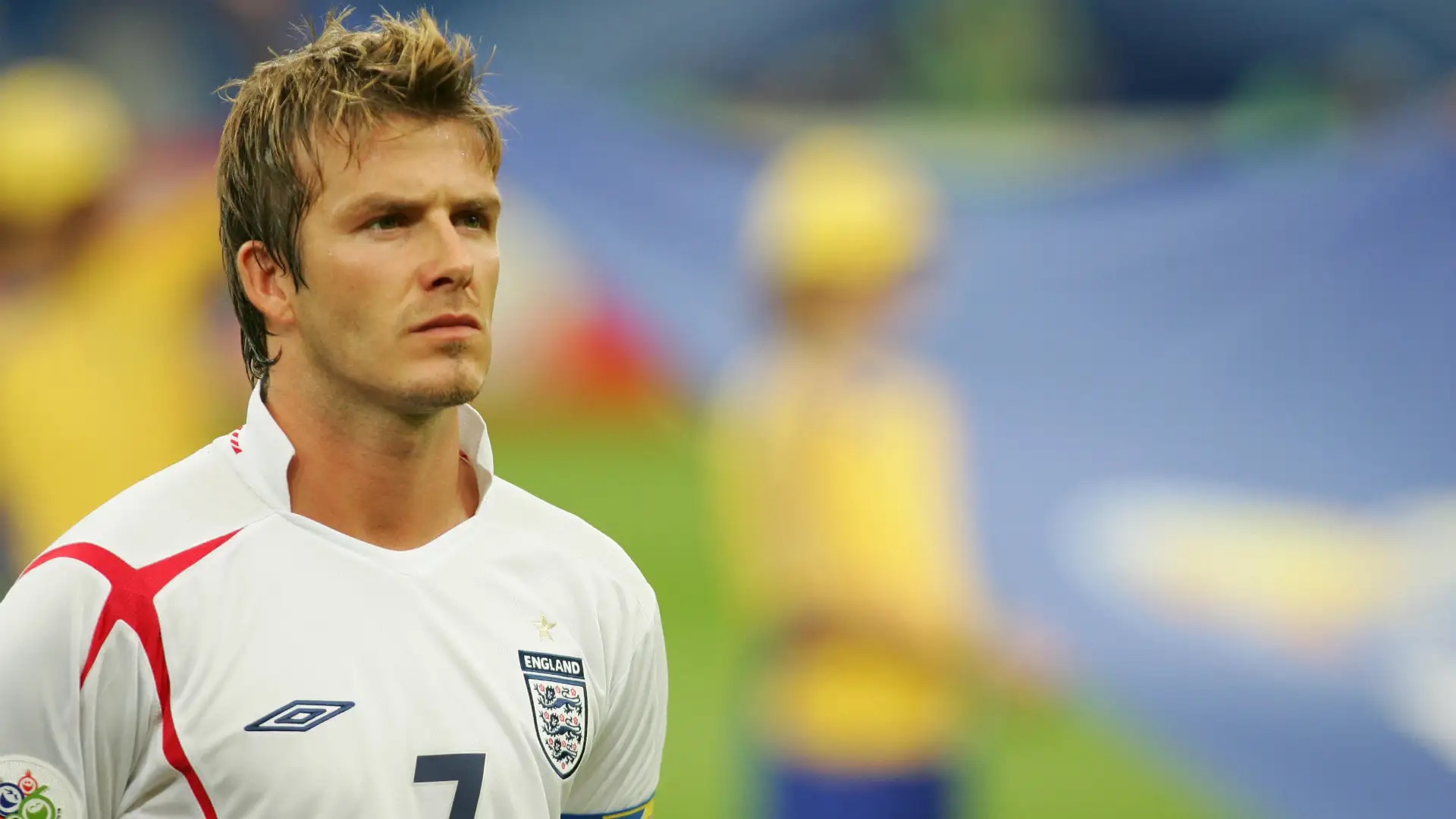
In 1998, David Beckham, one of England’s greatest prospects, became one of the most hated people in all of England overnight. At just 23 years old, one mistake because of Beckham not being able to withhold his anger transformed him from a national treasure into a scapegoat. Behind the boos, threats, burned effigies, and newspaper headlines detailing the negative psychological effects Beckham succumbed to through all this hatred was a little boy that saw the football pitch as the safest place in his world.
David Beckham grew up in East London. Like many children in England, becoming a professional footballer was a childhood dream. Beckham, however, would prove that this dream wasn’t as far-fetched as everyone believed, as he became a prodigy that England had their eyes on.
He joined Manchester United’s youth system and football became a central part of his whole identity. Beckham also suffered bullying and abuse from the students at his school, and he remembered feeling helpless and using football to escape the negativity surrounding him to help him overcome these feelings.
At only 23 years old, Beckham would play for England in the 1998 World Cup Round of 16 against Argentina. The match was enormous, with England and Argentina historically having a heated rivalry. Early in the second half, Argentina’s Diego Simeone fouled Beckham, and while lying down on the ground, Beckham would kick his leg towards Simeone in retaliation.
This action would lead to the referee giving Beckham a red card, leading to England having to play with one man down for the rest of the match. The team would reach penalty shootouts where they would lose 4-3. After the loss, Beckham immediately became the sole person to blame.
Simeone later acknowledged that the retaliation kick by Beckham probably did not warrant a red card and it was because of his exaggerated fall that led to Beckham being punished with a red.
Already defeated and feeling guilt, British tabloids responded with brutal criticism that made Beckham look like England’s number one enemy. Even England’s manager, Glenn Hoddle, didn’t fully protect Beckham, and Beckham felt defeated knowing that although Hoddle didn’t go outright and blame him, Beckham knew deep down that Hoddle believed the loss was because of him.
What started as sports criticism and heated debate after a very heartbreaking loss turned into Beckham believing he was treated as a traitor of the country. He received death threats, relentless insults by England supporters, and even witnessed an effigy of him hung outside a pub.
The abuse followed Beckham everywhere he went, and he recalled not even being able to walk on the street without receiving dangerous glares, people verbally abusing him, and people spitting at him.
A kid that once was crowned England’s rising prospect was reduced to one of England’s most hated individuals, all because of a single mistake caused by losing his temper.
Beckham later described not eating and sleeping. He said he “was a mess.”
Even years after the incident, he still struggled with it because the experiences during that time were so extreme.
Beckham was not the only one affected, and his shame was further exemplified by the fact that fans attacked his family and partner. Beckham would later explain that he struggled to forgive himself for bringing so much negative attention to his family and believed that he had caused it.
After the World Cup, Beckham would be called by manager Sir Alex Ferguson of Manchester United. He recalled telling Ferguson that he felt like a failure and didn’t feel like he could come back to Manchester, yet Ferguson reassured him that he could do it.
Shockingly, once he was on the pitch, all the worries and grievances he had melted away. The one place that harbored all the criticism and negativity was the only place that Beckham felt safe. He felt in control. Beckham couldn’t control the headlines, what strangers said, how people confronted him, how his family was pressured by the press, but he could control how well he played on the field, and he played really well.
Manchester United would become his support system, and the fans of the club continued to chant his name despite the rest of England condemning it.
Beckham would have the best season of his career with Manchester United, winning the Premier League, FA Cup, and UEFA Champions League. Beckham would score in the Champions League final, equalizing the game against Bayern Munich and eventually leading Manchester United to win 2-1.
Less than a year after being blamed for ending England’s World Cup run, Beckham stood on Europe’s biggest club stage as a Champions League winner.
Years later, in March of 2026 during a TED/ReThinking interview, Beckham discussed that the pressure he faced directly all those years ago allowed him to actually perform better. Competition was something he could channel into greatness and Beckham showed that even when your surrounding environment was painful, you could make the situation better than you left it with the help of others.
Beckham would become a UNICEF Goodwill Ambassador in 2005, later establishing the 7 Fund with UNICEF, its work focusing on combatting bullying and violence against children. He recalls being bullied at school and talks about how bullying and online threats can have severe impacts on people’s mental health.
Through his experiences, Beckham showed that even when the whole world was against you, finding something special can help silence everything around you, allowing you to focus on yourself and the people who you care about the most.
Share
Share this story
References
Sources
- FIFA — Argentina vs. England, 1998 World Cup retrospective (external link)
- FIFA — “When David Met Diego” (external link)
- Sky News — Beckham’s 1998 World Cup red card and psychological aftermath (external link)
- The Guardian — David Beckham discussing OCD (external link)
- The Independent — Beckham’s 2006 OCD disclosure (external link)
- Variety — David Beckham interview, 2026 (external link)
- TED / ReThinking with Adam Grant — David Beckham on pressure and mistakes (external link)
- UNICEF — David Beckham, World Children’s Day remarks (external link)
- UNICEF UK — Beckham discussing bullying (external link)
- The Guardian — Beckham reaching out to Harry Maguire (external link)